The DWC Says It's Trucking Water Into Yala. We're Still Watching.
Updated: Aug 25
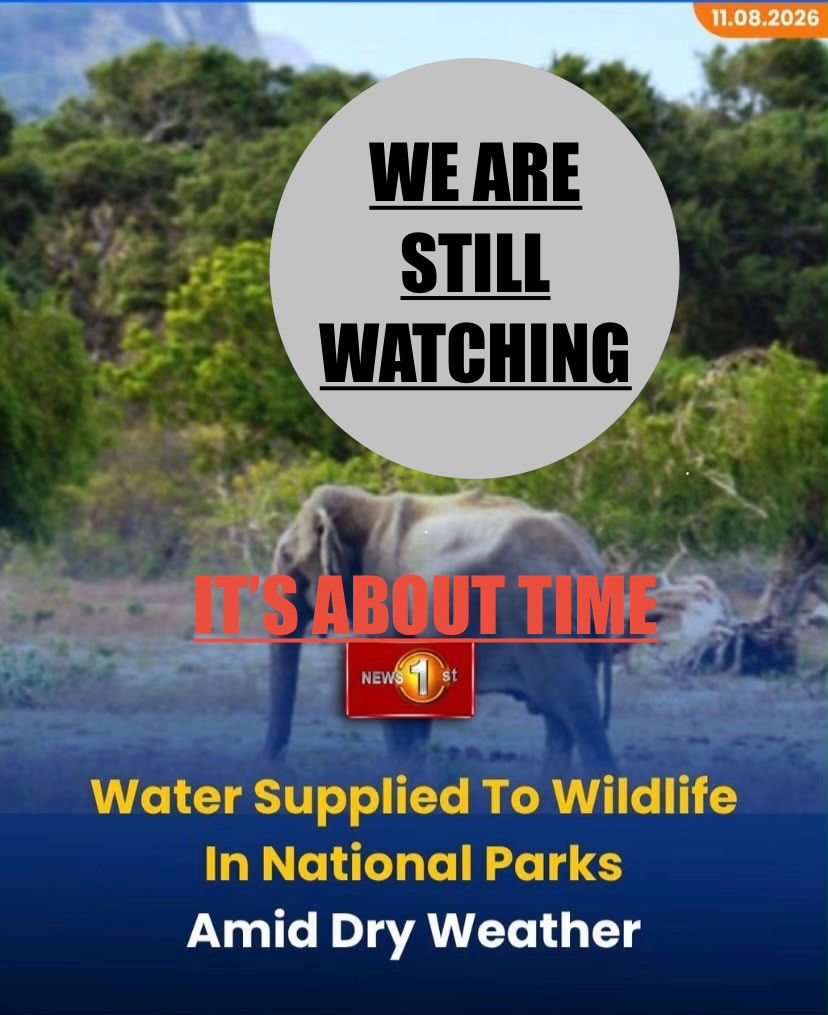
A Screenshot of news reporting Government Announcement on Sri Lankan Media 'News First'
The Department of Wildlife Conservation has announced on state television that it is trucking water into Yala National Park. That's welcome, if it's true, and if it reaches the animals who actually need it.
It's worth saying plainly: this is good news, as far as it goes. But an announcement is not the same thing as water arriving where it's needed, and this department's recent record gives real reason to check rather than simply take the announcement at face value. Weeks of requests from animal welfare organisations and environmentalists to bring water into Yala were refused outright, on the stated grounds that thirst is a legitimate form of population control. That refusal shifted at some point after footage of dry watering holes circulated and public pressure built, with water reportedly reaching roadside areas of the park rather than the interior, where most of the park's range actually is. It isn't yet clear whether that roadside water had already started arriving before today's announcement, or whether today is the first real confirmation of it. Either way, a television announcement isn't the same thing as verified delivery. It just means people are watching, which is presumably part of why the announcement was made the day before World Elephant Day.
So we're glad to hear it. We're also going to keep watching to see where that water actually goes, how much of it reaches the interior rather than the roadside, and whether it keeps arriving once Yala goes into its annual closure on 1 September, when there will be no cameras and no public pressure to respond to.
None of this needed to be complicated in the first place. Bringing water into Yala during a drought is not a new or difficult problem to solve, and it has never relied on the DWC alone. In 2016, Jetwing donated over 190,000 litres of water to the park, delivered through bowsers arranged with the Jeep Drivers' Association. Cinnamon Wild Yala, working with the John Keells Foundation, ran 30 bowser loads to fill and maintain waterholes. Walkers Tours funded another 12. As recently as 2023, the Sri Lanka Tourism Development Authority was still coordinating directly with the Yala hoteliers' association to arrange bowsers alongside the DWC. And it hasn't only been hotels: in August 2025, the Kirivehera Raja Maha Viharaya sent its own bowser into the park at the request of the local park warden, distributing water to small, dried-up ponds on the temple's own initiative. Companies, tour operators and temples have all stepped in when asked, because everyone involved understood that thirsty animals were not a debate to be had, they were a problem to be solved.
This year, that shared effort didn't happen the same way. Water had to be refused first, then walked back under pressure, then finally announced on television as though it were a gift rather than a basic response to a crisis the department had already been asked to address for weeks. By our source's account, this is the first administration to actually stop individuals and companies from supplying water themselves, rather than working alongside them the way past administrations did. We can't independently verify that claim, but we can verify the pattern it describes: outside help used to be routine, and this year it wasn't there until the story became one the government needed to be seen responding to.
We'll take the water. We'd have preferred it weeks ago, when it was first asked for and refused, and we'd prefer to see it going somewhere other than the roadside. Either way, we're not going anywhere.
“If you haven’t read it yet, this earlier report explains the context: ‘Elephants Are Going Thirsty in Yala. The Wildlife Chief Calls That "Nature’s Course.


Comments